
Sparks Brain Preservation
A Non-profit Organization
This is a somewhat technical page describing some of the molecular structures that would need to be repaired for Biological Revival. The details are similar for both our standard fixation patients as well as Traditional Cryonics patients.
The repairs would all involve extensive inference. This means that AI would need to try to extrapolate what the original structure looked like in spite of different kinds of damage.
Each cell is surrounded by a membrane. This is the most fundamental repair that would need to be made because the exact shape of a neuron is defined by its membrane. The membrane is somewhat fragile, but it's held in place by a cytoskeleton. Here's what a cytoskeleton looks like. Even if a membrane was torn or missing, the cytoskeleton could be used to infer where the membrane was supposed to be and it could then be repaired.

Neurons have long delicate axons and dendrites. For example, it's common for a single neuron to span the entire brain. It's very important to maintain this continuity, but damage could make that difficult. There could be ambiguity about which two ends need to be matched up. Fortunately, each neuron has surface markers that allow unique identification and which would allow matching up those ends. Clearly, reading those markers would need to be part of future scanning. As the cell membranes get repaired, we would end up with what we call a connectome. But this is just the membrane repair step.

In our standard fixed brains, 100% of the proteins would need to be repaired by removing the aldehyde molecules (shown in red below). In a cryonics case, there would be protein damage between about 5% and 90%, depending on the level of cryoprotectant in a given area. If 20% of proteins were damaged, that would translate to 10 million proteins per cell that would require repair. So while the percentages may be different between fixed and cryopreserved brains, the same fundamental repairs would be needed in both cases. Both fixation and cryopreservation would require the exact same very high technology.

Eric Drexler has been called “the godfather of nanotechnology.” His influential book Engines of Creation laid out the theoretical foundations for machines capable of molecule-by-molecule biological repair. The method of long-term preservation that Drexler proposed in his book was aldehyde fixation and cryopreservation, reasoning that molecular nanotechnology could identify and undo the aldehyde bonds that this introduces. Aldehyde bonds between molecules are not exotic chemistry. They occur naturally in our cells from metabolic byproducts like formaldehyde, and living cells have already evolved repair enzymes that detect and respond to them. The challenge is performing such repairs at scale across an entire brain. This is what molecular nanotechnology is proposed to allow for.
The Future Technologies page lays out a variety of specific technologies that would be required for biological revival.
Ice damage would only be present in traditional cryonics cases. Perfusion quality is never good in traditional cryonics cases and perfusion is frequently impossible. This means that there would either be some ice or extensive ice. These images show ice crystals in white or as voids, and they show how severely the brain tissue gets compressed in the remaining space between ice crystals. It's very likely that this damage could not be repaired at all.
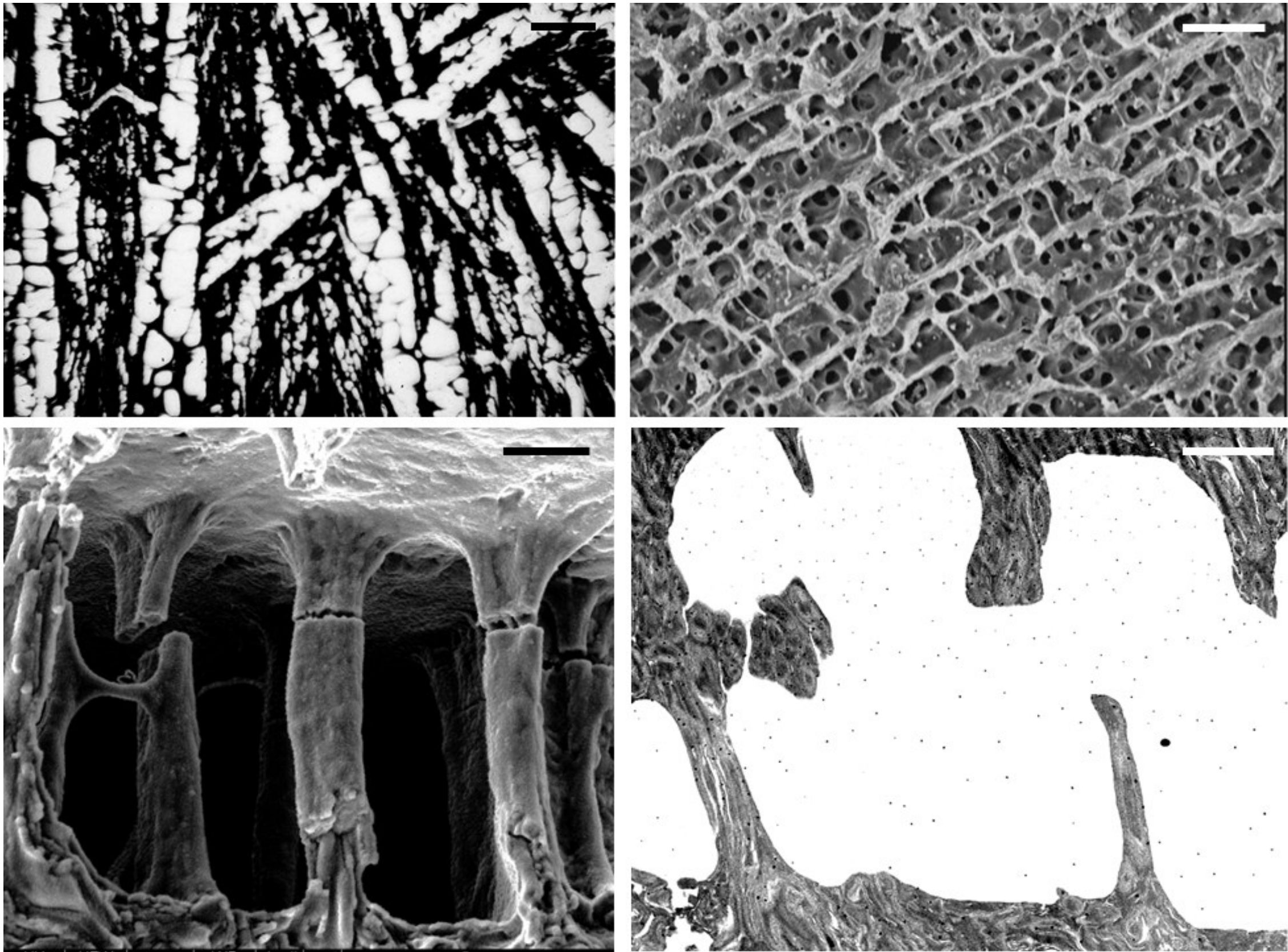

This would be far easier than any of the repairs above. From any cell, you could grow an entire new body. Each cell already has all the programming to grow a new body if we can provide it the right conditions. Growing a new body from the preserved person's DNA and epigenetic biomolecules would be straightforward long before brain repair becomes feasible. To avoid ethical problems, the new body would likely be grown around the existing brain rather than grown separately. This is not repairing molecules as above. It's much easier. The technology does not need to operate inside the cell at all. This will have been routine for many decades before we even start to think about repairing brains.

Any revival process would need to be highly regulated to protect the interests of revived individuals. We expect that revival would involve medical teams operating within a framework of rights for preserved patients. Those rights would include independent oversight from judges, lawyers, ethicists, physicians, and others who would help determine what course of action best served each patient's interests based on their own goals and values. At SBP, we are committed to advocating for our patients throughout this process to ensure that their preferences for revival are respected.